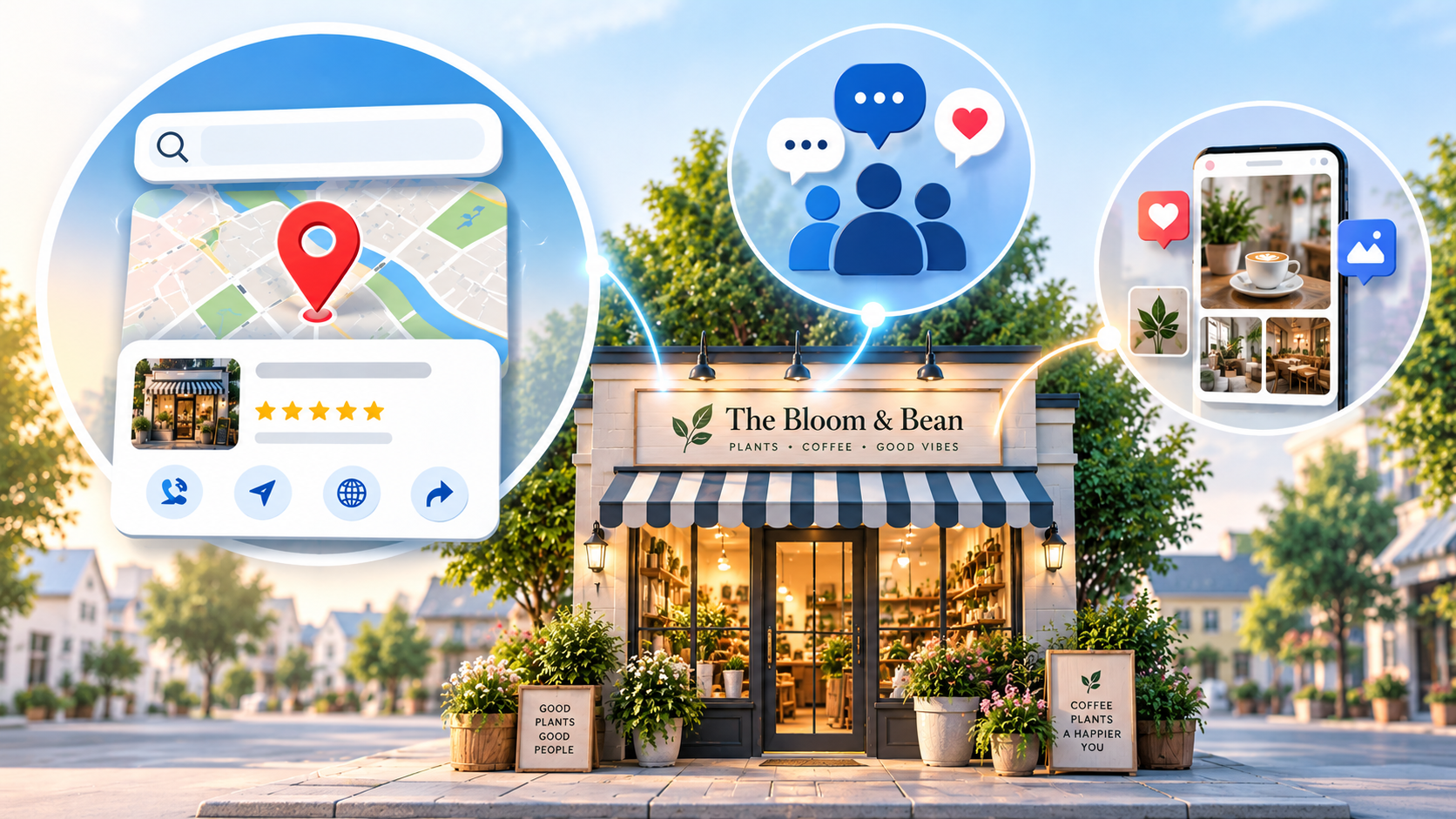
Confused about Google Business Profile vs. your Facebook and Instagram pages? Here’s what each one actually does for your small business and how to use all three together.
If you run a small business, you’ve probably got a Google Business Profile, a Facebook Page, and an Instagram account and you’ve probably wondered whether you’re duplicating effort by maintaining all three. It’s a fair question, on the surface they can look like three copies of the same listing.
They’re not. Google Business Profile, Facebook, and Instagram are built for different jobs, they show up in different places when someone searches for you, and they influence your visibility in different ways.
Understanding those differences rather than treating all three as one task to “set up once and forget” is what actually moves the needle for local businesses. This guide breaks down what each platform does best, where they overlap, and how to prioritize your time across all three.
Quick Answer: Which Platform Should You Prioritize?
If you run a local business, start with Google Business Profile.
Think of the three platforms this way:
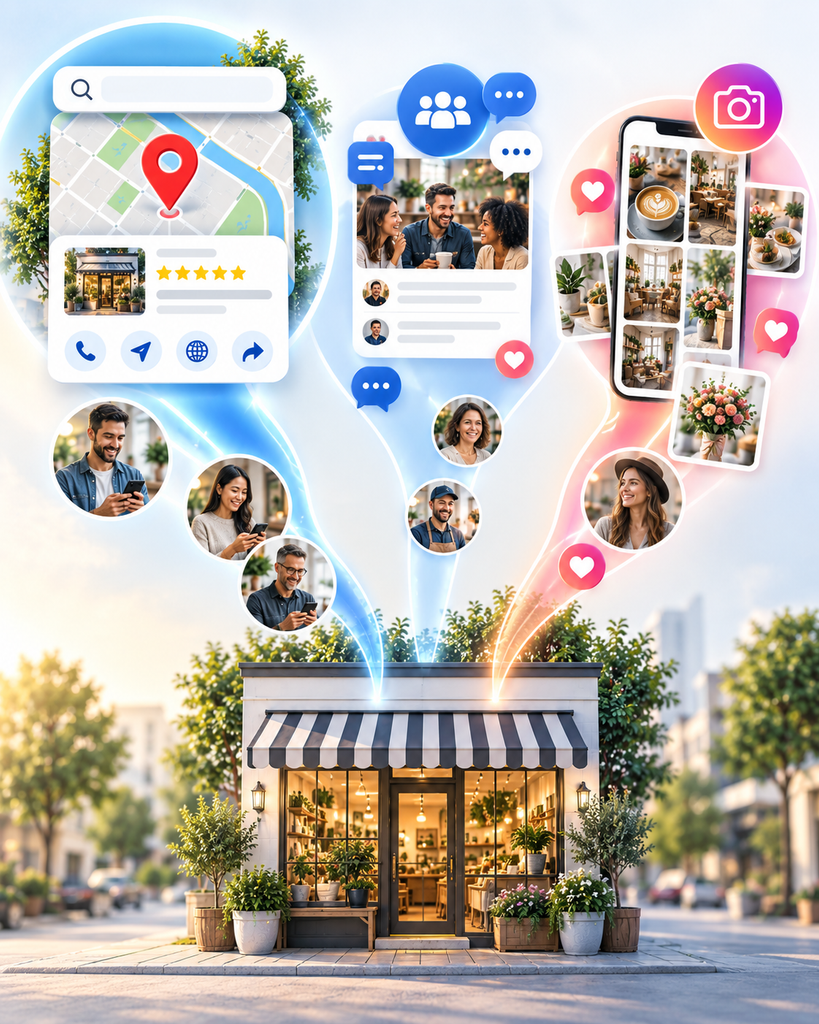
Google Business Profile = Get found
Facebook = Build community
Instagram = Get noticed
Google Business Profile is especially important because it puts your business in front of people who are already searching for businesses, products, or services like yours on Google Search and Maps. Google says local rankings are primarily influenced by relevance, distance, and prominence.
Facebook and Instagram are still valuable but their main job is different. They’re better suited to keeping people engaged, showing your personality, sharing content, and staying visible between searches.
What is a Google Business Listing, and Why Does It Matter?
A Google business listing is an online profile that shows core information about your business: name, address, phone number, hours, and category to people searching for you or for businesses like yours. Search engines and social platforms use these listings to answer local queries like “coffee shop near me” or “plumber open now.”
For small businesses, listings matter because they’re often the first impression a potential customer gets before they ever visit your website. An outdated address, a wrong phone number, or an inactive profile can quietly cost you customers who never tell you they gave up.
Google Business Profile: Built for Local Search
Google Business Profile (GBP) is your business’s presence on Google Search and Google Maps. It helps potential customers see important information such as your business name, category, location or service area, hours, phone number, website, photos, reviews, and other business details.
Think of it as your digital storefront on Google.
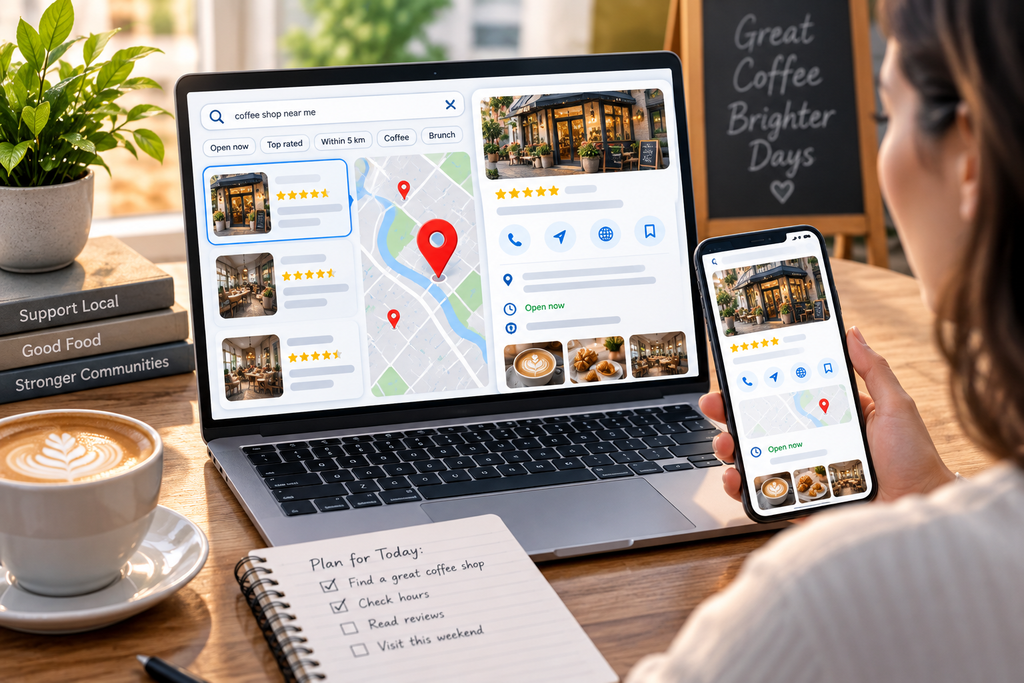
If someone searches for “bakery near me,” “plumber in [city],” or “yoga classes near me,” Google may show relevant local businesses in Search or Maps. A complete and accurate Business Profile helps Google understand what your business offers and helps customers decide whether to contact you.
And unlike a social media post, your Business Profile isn’t dependent on someone following you first. It can appear when a person is actively looking for something you provide.
What GBP Is Best At
Discovery by intent: Someone searching for “bakery open now” or “emergency locksmith near me” already has a need. Your Business Profile can put your business in front of that person at the right moment.
Local visibility: Your profile can appear across Google Search and Maps when Google determines that your business is relevant to the search. Local results are primarily influenced by relevance, distance, and prominence.
Trust at the decision point: Customers can see your hours, photos, reviews, website, phone number, and other business information before deciding what to do next.
Direct customer actions: Depending on your business and available features, customers may be able to call, visit your website, request directions, read reviews, or interact with other profile features.
Ongoing updates: You can keep important information, photos, posts, and other profile details current. Google specifically recommends keeping business information accurate and up to date.
What It’s Not Built For
Google Business Profile isn’t a replacement for your website or social media accounts.
It’s also not a platform where you should expect every post to reach a large audience. Its greatest strength is being visible when someone is looking for a business or service, rather than building a follower-based audience.
Think of it less like a social media feed and more like a digital signboard, storefront, and review counter combined.
GBP isn’t a place for storytelling, community-building, or visual branding the way social platforms are. Posts are short-lived, the format is rigid, and there’s no algorithmic feed pushing your content to new audiences. It answers “does this business exist and can I trust it?” not “do I want to follow this brand?”
Facebook Page: Built for Community and Local Trust
A Facebook Page functions less like a search listing and more like a public storefront combined with a community board. People land there after being referred, after seeing an ad, or by searching Facebook directly, often with more context about your business already in mind.

What Facebook Does Best
Two-way engagement. Comments, reviews, Messenger, and community groups let customers interact directly and publicly, which builds social proof over time.
Local event and group visibility. Facebook Events and local buy/sell/community groups still drive meaningful foot traffic for small, local-facing businesses.
Older demographic reach. Facebook remains one of the strongest channels for reaching an older or more local, neighborhood-oriented audience than Instagram tends to reach.
Ad targeting. Facebook’s ad platform allows hyper-local targeting by zip code, interest, and behavior useful for promotions GBP simply can’t run.
Real-world example
Imagine you own a small bakery.
Someone searching “birthday cake near me” is a strong Google Business Profile opportunity.
Someone who already bought a cake from you and follows your Facebook Page might see your post about a new weekend special.
Same business. Different customer mindset.
What It’s Not Built For
Facebook doesn’t feed directly into Google’s local search algorithm the way GBP does. A beautifully maintained Facebook Page won’t help you rank in the Google map pack. It’s a destination, not a discovery engine.
Instagram: Built for Visual Branding and Discovery by Interest
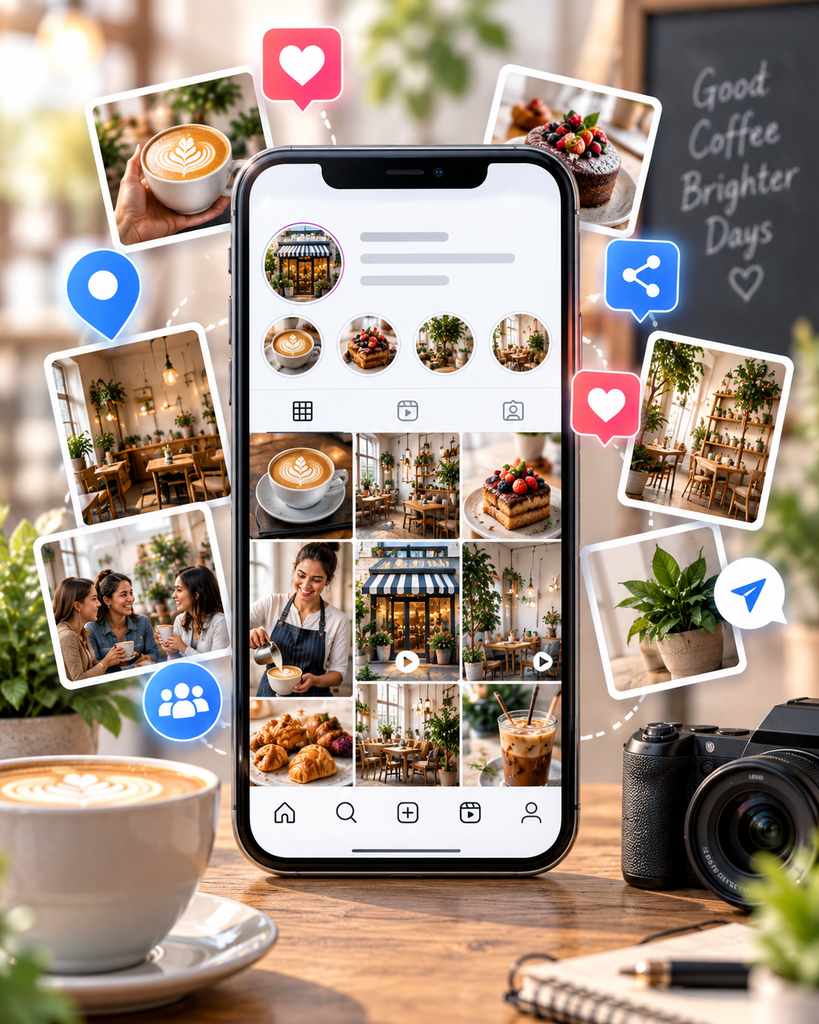
Instagram operates on a different logic entirely, people don’t usually search Instagram the way they search Google. Instead, they discover businesses through hashtags, Explore/Reels recommendations, and being tagged or shared by others.
What Instagram Does Best
- Visual-first branding. For businesses where appearance sells the product: restaurants, salons, boutiques, florists, contractors showing before/after work, Instagram is often more persuasive than any text-based listing.
- Discovery by aesthetic and interest, not by explicit need. Someone isn’t typing “best coffee shop” into Instagram; they’re scrolling and stopping because a photo caught their eye.
- Younger audience reach, generally skewing younger than Facebook.
- Shopping integration, letting product-based businesses tag items directly in posts and Stories.
What It’s Not Built For
Instagram has no meaningful connection to local search rankings, and its business “listing” info (hours, address, contact) is easy for customers to miss since it sits below the visual content, not above it.
Google Business Profile vs. Facebook vs. Instagram: Side-by-Side
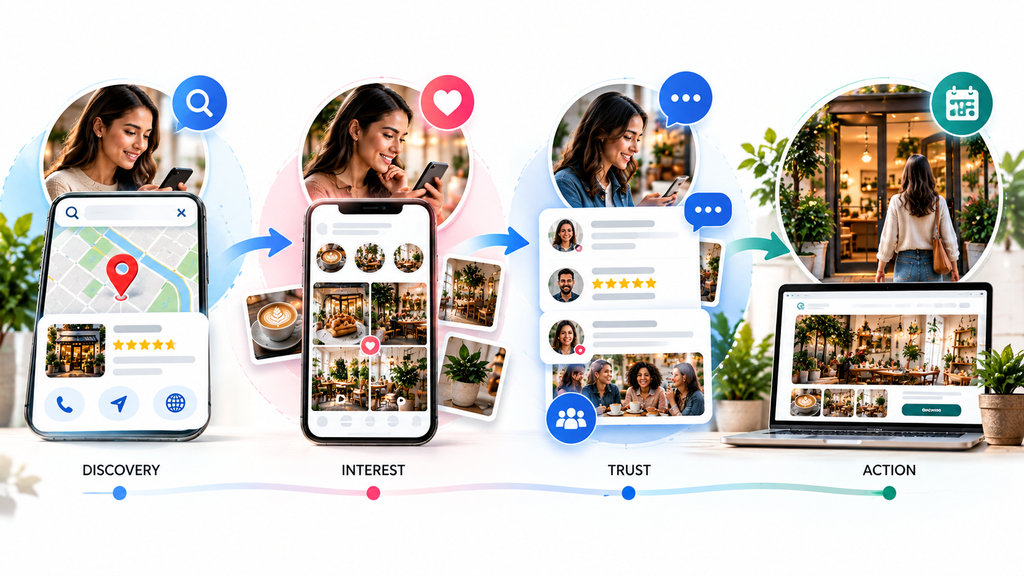
| Factor | Google Business Profile | Facebook Page | |
|---|---|---|---|
| Primary role | Local search discovery | Community & trust-building | Visual branding & interest-based discovery |
| Shows up when someone… | Actively searches for your service | Is referred, ad-targeted, or searches Facebook | Scrolls, follows hashtags, or gets tagged |
| Impact on Google ranking | Direct and significant | Indirect at best | Indirect at best |
| Best for | Being found by ready-to-buy customers | Reviews, local groups, customer service | Visual products/services, younger audiences |
| Update frequency needed | Ongoing (posts, Q&A, reviews) | Frequent, community-driven | Frequent, visually consistent |
Recommended Read:
Top 10 Benefits of Google Business Profile for Small Businesses
5 Common Social & Google Business Mistakes Small Businesses Make
1. Treating Google Business Profile like social media
Your Business Profile doesn’t need to become a daily content marathon. Focus first on accurate business information, the right category, reviews, photos, and useful updates.
2. Creating social profiles but leaving them half-finished
A Facebook Page or Instagram profile with an outdated phone number, old opening hours, broken website link, or six-month-old content can make a business look inactive.
3. Expecting social media to replace Google
Facebook and Instagram can generate awareness and relationships, but they aren’t substitutes for being discoverable when customers actively search for your service.
4. Ignoring reviews
Reviews are more than decoration. Google says review count and positive ratings can contribute to prominence in local search. Responding to reviews also gives customers another signal that your business is active and paying attention.
5. Trying to be everywhere
A small business owner doesn’t need to spend three hours every day creating content for five platforms.
Choose the platforms according to the job they need to do.
For many local businesses, that means getting Google Business Profile right first, then using one or two social platforms consistently.
Frequently Asked Questions
Q: Do I need all three, or can I just pick one?
A: If you only have time for one, prioritize Google Business Profile, it’s the only one of the three that directly affects whether you show up in local search. But Facebook and Instagram fill gaps GBP can’t: community trust and visual persuasion, respectively.
Q: Does a strong Facebook or Instagram following help my Google ranking?
A: Not directly. Google’s local ranking factors center on your Business Profile itself, accuracy, reviews, categories, and engagement on the profile. Social platforms build brand trust and traffic, which can indirectly support SEO, but they aren’t a ranking input for Google Maps or local search.
Q: My hours differ across platforms, does that matter?
A: Yes. Inconsistent hours, addresses, or phone numbers across listings erode customer trust and can hurt local search credibility, since search engines cross-check listing consistency as a trust signal.
Q: Should I respond to reviews on all three?
A: Ideally yes, but if time is limited, prioritize Google reviews first, they’re the most visible to new customers making a decision, and they factor into local search visibility.
Conclusion: Different Tools, Different Jobs
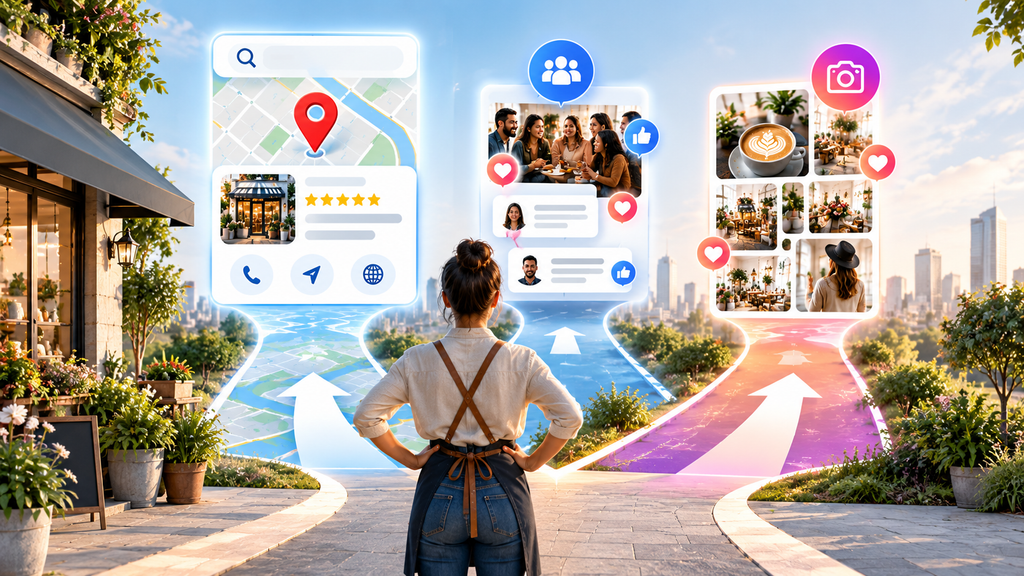
Google Business Profile, Facebook, and Instagram aren’t competing versions of the same listing, they’re three different tools solving three different problems. GBP gets you found by people who are actively searching and ready to act. Facebook builds ongoing community trust and enables targeted local ads. Instagram sells your business visually to people who weren’t searching but stop scrolling because something caught their eye.
The businesses that get the most value out of their online presence aren’t the ones spreading themselves thin trying to post identically everywhere, they’re the ones that understand which platform is doing which job, and invest their limited time accordingly.
Want to know what’s helping or hurting your visibility on Google?
Get your Google Business Profile audited for free and find out what needs attention, from your business category and hours to your photos and customer information.
Start by auditing your Google Business Profile this week for free, check that your hours, category, and photos are current, since it has the most direct impact on whether new customers find you at all.